Ductwork Heat Gain Mitigation: Aeroseal, Static Pressure Balancing, and Attic Thermal Buffers

Lead Technical Writer & Trade Compliance Analyst • American Trade Registry Research
The Core Problem & Regulatory Context
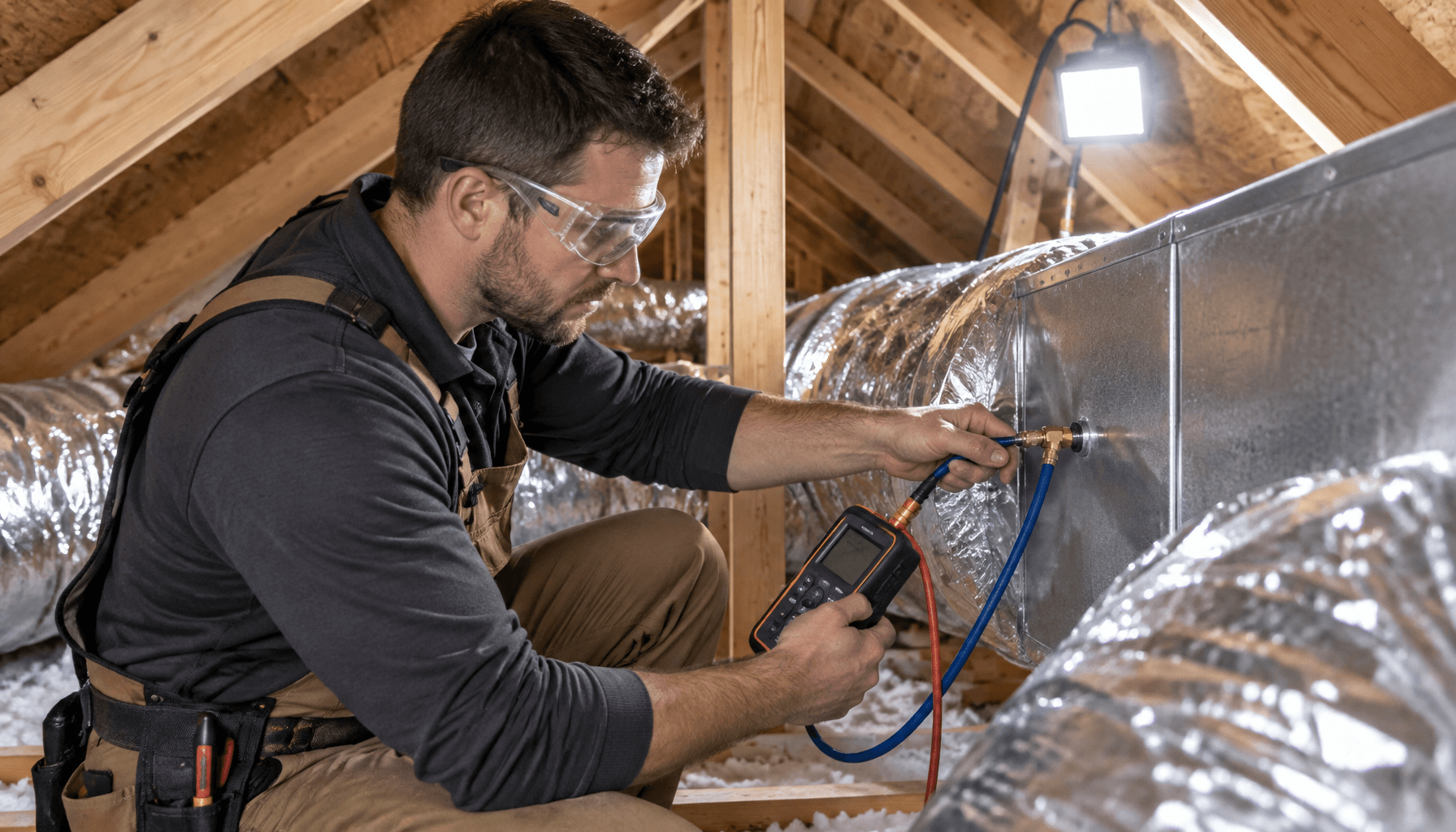
High attic temperatures in the Southwest, especially Phoenix, push HVAC systems to their limits. Ductwork, often overlooked, faces heat gain issues that can impair system efficiency. Attic temperatures can exceed 150°F, causing heat transfer into ducts and decreasing the cooling capacity. This results in increased energy costs and reduced comfort levels. IRC Section M1601 mandates proper duct insulation, specifying R-8 minimums to limit thermal losses. However, compliance is often neglected, leading to avoidable energy inefficiencies.
Arizona's specific regulatory environment requires adherence to Title 32, Chapter 10, which governs contractor licensing and ensures that HVAC installations meet statutory compliance. Negligence in this area can result in significant financial penalties. Installers must also consider electrical standards outlined in the NEC (NFPA 70), particularly regarding grounded circuit integrity to prevent fire hazards in overheated conditions. Missteps here can void insurance claims and warranties, compounding property risks.
The cost of non-compliance is steep. Energy bills can surge by 30%, and system lifespan reduces by up to 20% due to excessive strain. Cutting corners costs more in the long run. Property owners end up shouldering the financial burden, with potential fines from AZ ROC for unauthorized work. Adherence isn't optional it's a legal requirement.
Workflow Architecture & Execution Topology
┌───────────────┐
│   Heat Source │
└──────┬────────┘
       │
       ▼
┌───────────────┐
│     Attic     │
│ Temp: 150°F+  │
└───┬───────┬───┘
    │       │
    ▼       ▼
┌─────────┐ ┌─────────┐
│ Ductwork│ │  Static │
│  Sealing│ │ Pressure│
│  (R-8)  │ │ Balance │
└─────────┘ └─────────┘
    │       │
    └───────┘
       │
       ▼
┌────────────┐
│   HVAC     │
│ Efficiency │
│Improvement │
└────────────┘
Methodology Benchmark: Legacy Approaches vs. Modern Standards
| Criteria | Unverified/Legacy Methods | Modern ATR Assured Standards |
|---|---|---|
| Vetting Rigor | Minimal inspection | Comprehensive AZ ROC checks |
| Escrow Protection | No financial safeguards | Secure payment frameworks |
| Audit Trail | Fragmented records | Integrated digital logs |
| Statutory Certification | Occasional verification | Mandatory compliance audits |
Essential Takeaways & Axioms for Property Owners
- Insist on R-8 insulation. Verify compliance with IRC Section M1601 to prevent heat gain.
- Demand AZ ROC licenses. Check contractor credentials under Title 32, Chapter 10 before work begins.
- Seal ducts with Aeroseal. Reduce leakage and improve HVAC efficiency.
- Balance static pressure. Ensure even CFM distribution across all registers.
Document Tags & Standards
Oliver Green
Verified Trade Standards AnalystLead Technical Writer & Trade Compliance Analyst • American Trade Registry Research
Lead technical writer and trade compliance systems analyst at American Trade Registry. Researching US building codes (IBC/IRC), OSHA safety mandates, state contractor licensing compliance, Mechanics Lien statutes, and automated contractor vetting and escrow assurance workflows for American property owners.
Need a vetted, licensed local pro?
Post your job in 90 seconds. We match you with verified, ROC licensed & insured tradespeople backed by our Peace of Mind guarantee.