
Utilizing Technology for Effective Slab Leak Detection in Phoenix Homes

Lead Technical Writer & Trade Compliance Analyst • American Trade Registry Research
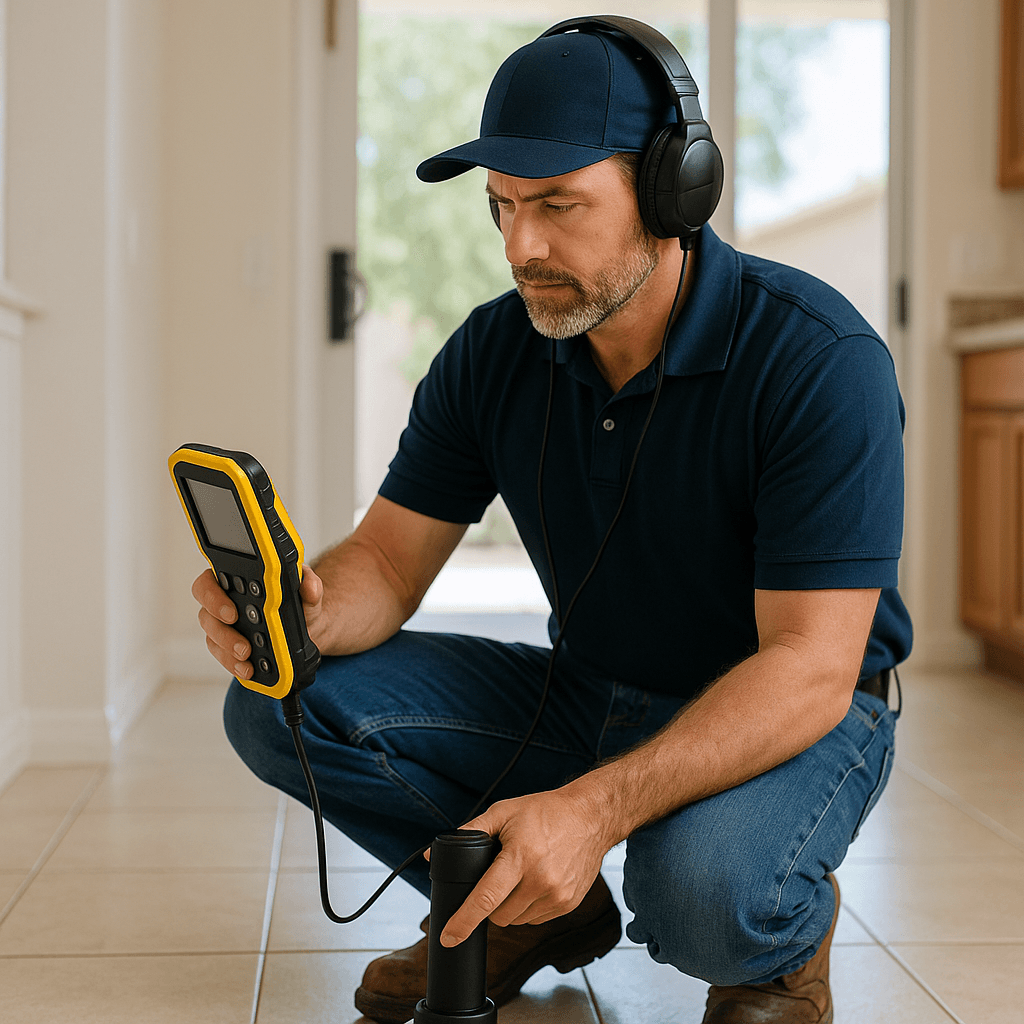
The Core Problem & Regulatory Context
The detection and rectification of slab leaks in Phoenix homes is not merely a matter of convenience but a significant concern governed by stringent regulatory frameworks. The International Building Code (IBC) and International Residential Code (IRC) are critical in addressing structural integrity, demanding adherence to water management standards that prevent property damage caused by unchecked leaks. The Uniform Plumbing Code (UPC) further delineates guidelines for plumbing installations, requiring watertight systems to avert costly repairs. In Arizona, the Registrar of Contractors (ROC) mandates licensed professionals for leak detection and repair, emphasizing the importance of certified expertise in handling such complex issues.
Slab leaks occur when pipes beneath a home's concrete foundation corrode, shift, or break due to soil movement or installation errors. Such leaks, if left untreated, can lead to severe structural damage, including foundation cracks and mold proliferation, which can affect the indoor air quality and pose health risks. The economic impact is substantial, with repair costs in Phoenix often ranging from $2,000 to $6,000, according to local contractor estimates. Ignoring these leaks can escalate expenses dramatically, as water damage compromises the property's structural integrity.
Homeowners must engage licensed contractors for slab leak detection and repairs. Always. Compliance with OSHA standards ensures that the work environment is safe, protecting both workers and residents. Meeting these regulatory requirements not only safeguards the property but also preserves the homeowner’s investment, preventing unnecessary depreciation of property value.
Workflow Architecture & Execution Topology
 [Start] > [Initial Inspection]
 | |
 | v
 | [Positive Leak Test?] No > [End]
 | |
 v Yes
 [Permit Verification]
 |
 v
 [Non-Destructive Testing]
 |
 v
 [Locate Leak]
 |
 v
 [Repair Strategy]
 |
 v
 [Execution & Compliance Check]
 |
 v
 [Final Inspection]
 |
 v
 [Document & Certify]
 |
 v
 [End]
Methodology Benchmark: Legacy Approaches vs. Modern Standards
| Criteria | Legacy / Naive Practice | Modern ATR Assured Standard |
|---|---|---|
| Vetting Rigor | Unverified Contractors | ROC Certified Professionals |
| Deposit Security | No Escrow Use | Secure Escrow Account |
| Dispute Recourse | Limited Recourse | Full Documentation & Arbitration |
| Statutory Certification | Non-compliant Practices | Adherence to IBC/IRC, UPC |
Essential Takeaways & Axioms for Property Owners
- Always hire contractors who are ROC licensed and certified to ensure compliance and expertise.
- Use escrow payments to secure funds until project completion and satisfactory inspection.
- Demand detailed documentation for every repair phase to create a reliable audit trail.
- Ensure all actions comply with IBC, IRC, and UPC standards to protect property value and safety.
Document Tags & Standards
Oliver Green
Verified Trade Standards AnalystLead Technical Writer & Trade Compliance Analyst • American Trade Registry Research
Lead technical writer and trade compliance systems analyst at American Trade Registry. Researching US building codes (IBC/IRC), OSHA safety mandates, state contractor licensing compliance, Mechanics Lien statutes, and automated contractor vetting and escrow assurance workflows for American property owners.
Need a vetted, licensed local pro?
Post your job in 90 seconds. We match you with verified, ROC licensed & insured tradespeople backed by our Peace of Mind guarantee.