Essential Techniques for Detecting and Repairing Slab Leaks in Phoenix Homes

Lead Technical Writer & Trade Compliance Analyst • American Trade Registry Research
Understanding Slab Leaks in Phoenix: The Basics
Slab leaks, prevalent in Phoenix due to the region's caliche-rich soil, pose significant threats to residential structures. Caliche, a hardened natural cement-like layer, when shifting, can lead to pipe abrasion resulting in leaks. Copper piping, common in homes built before the 1990s, is especially vulnerable. Water pressure variances, often exceeding 80 psi, exacerbate this risk. Never ignore warm slab spots. Early detection prevents extensive structural damage and mold proliferation. Ensure compliance with the 2018 International Residential Code (IRC), which mandates provisions for proper water pressure regulation and leak mitigation practices.
Permits protect equity. Arizona law requires permits for any repair work exceeding minimal thresholds, ensuring adherence to safety and quality standards. Verify license status first. Contractors must hold a valid CR-37 Plumbing License to undertake slab leak repairs. This license guarantees familiarity with both local codes and necessary technical skills.
Advanced Detection Techniques
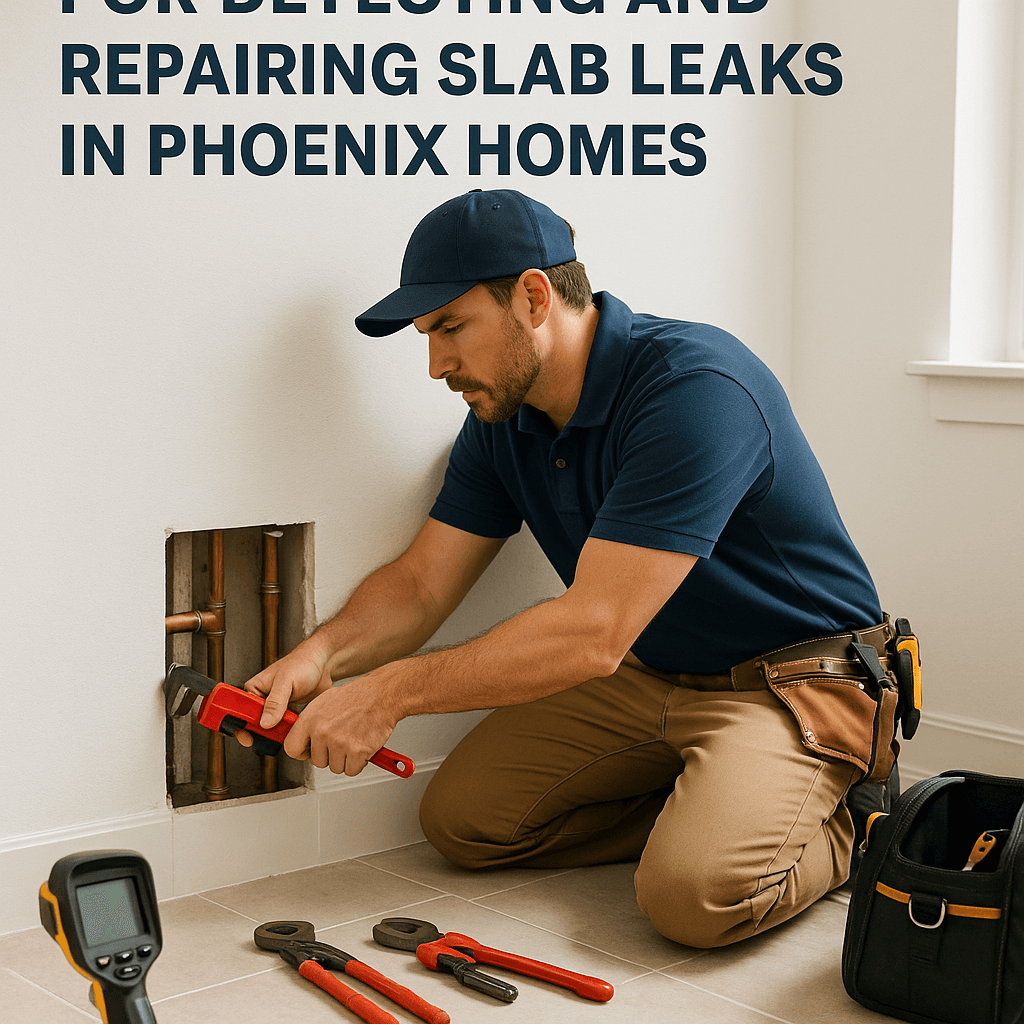
Detecting slab leaks accurately requires a combination of specialized equipment and skilled analysis. Acoustic listening discs permit technicians to isolate leak sounds beneath concrete, capitalizing on acoustical variances between leaking and non-leaking lines. Use of a tracer gas manifold, injecting a non-toxic gas that rises through soil and concrete cracks, is invaluable. Gas detectors then pinpoint leak locations with high precision. Caliche shifts. Thermal imaging cameras, utilizing infrared technology, identify temperature anomalies that suggest underlying pipe leaks. These non-invasive methods preserve structural integrity while providing definitive data.
Leaks destroy foundations. Utilize electronic amplification equipment, like ground microphones or leak correlators, to differentiate between normal water flow and potential leaks within slabs. Such equipment offers accuracy up to a 1-meter radius, essential for mitigating unnecessary excavation. Always correlate findings with water meter assessments to ascertain discrepancies between expected and actual water usage.
Repair Strategies and Materials
Planning and implementing repair strategies necessitate a thorough understanding of available materials and techniques. Epoxy pipe coating, an effective internal pipe restoration method, employs a cured epoxy resin applied to cleaned pipe interiors. This technique rejuvenates pipe integrity, adhering to ASTM F2831-11 standards. PEX piping replacements offer flexibility and durability, critical for navigating around caliche deposits without compromising structural integrity. Replace copper in critical zones.
Effective spot repair involves cutting and replacing affected pipe sections, adhering to UPC Chapter 6 guidelines, which detail proper soldering techniques and material selections for optimal water flow and pressure management. Use of dielectric unions prevents galvanic corrosion between dissimilar metals, ensuring long-term durability and compliance with plumbing codes.
Preventative Maintenance and Compliance
Regular inspection schedules, coupled with proactive maintenance, play a vital role in preempting slab leak occurrences. Engage a certified inspector to perform annual evaluations, checking for pressure irregularities and potential pipe vulnerabilities, especially in high-risk caliche areas. Never cut blindly. Deploy pressure-reducing valves as per UPC Table 603.2 to maintain system equilibrium and extend plumbing lifespan.
Encourage homeowners to familiarize themselves with water main shut-off procedures and leak signs, ensuring immediate response capability. Knowledge empowers. Prioritize adherence to local building codes and standards. Participation in educational programs offered by local trade associations enhances understanding and implementation of best practices, securing residential property integrity against potential plumbing disasters.
Document Tags & Standards
Oliver Green
Verified Trade Standards AnalystLead Technical Writer & Trade Compliance Analyst • American Trade Registry Research
Lead technical writer and trade compliance systems analyst at American Trade Registry. Researching US building codes (IBC/IRC), OSHA safety mandates, state contractor licensing compliance, Mechanics Lien statutes, and automated contractor vetting and escrow assurance workflows for American property owners.
Need a vetted, licensed local pro?
Post your job in 90 seconds. We match you with verified, ROC licensed & insured tradespeople backed by our Peace of Mind guarantee.