Monsoon Storm Roofing Resilience: Flashing, Tile Clips, and Microclimate Defense

Lead Technical Writer & Trade Compliance Analyst • American Trade Registry Research
The Core Problem & Regulatory Context
Monsoon storms in Arizona bring perilous wind speeds, often reaching 70 mph or more. These conditions pose a significant threat to roof integrity, especially in areas with microclimate variations. Roofing systems must withstand both the intense wind uplift and extreme UV exposure of the desert environment. Compliance with US building standards is mandatory to ensure safety and durability.
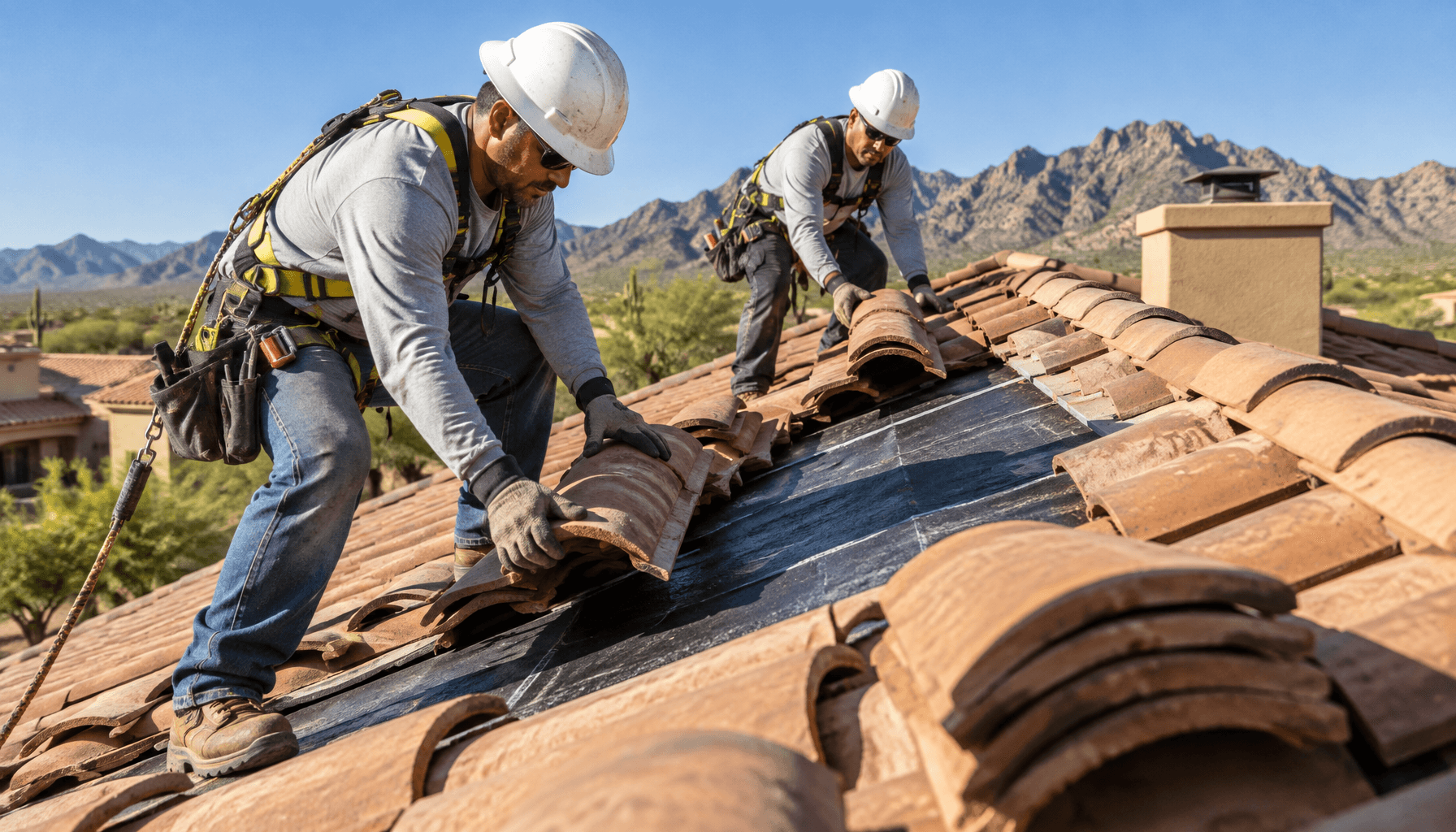
IRC Section R905.3.7 explicitly outlines the fastening requirements for roofing tiles. This section mandates the use of mechanical fastening methods such as screws or clips, particularly in high-wind areas. Tile clip mechanical fasteners offer superior resistance compared to traditional mortar or foam adhesives, which may fail under extreme stress.
IBC standards and Arizona ROC (Title 32 Chapter 10) dictate strict licensing requirements for contractors. Licensed professionals must adhere to these regulations, implementing systems that account for unique desert challenges: heat-induced material fatigue, clay caliche soil expansion, and UV degradation. Compliance is non-negotiable. Verify contractor’s ROC bonds to safeguard your property against substandard work.
Workflow Architecture & Execution Topology
+-------------------+
|   Roof Assessment |
+-------------------+
          |
          v
+-------------------+
| Material Selection|
+-------------------+
          |
          v
+-------------------+
|  Fastening Method |
+-------------------+
          |
          v
+-------------------+
|  Inspector Review |
+-------------------+
          |
          v
+-------------------+
|  Final Compliance |
+-------------------+
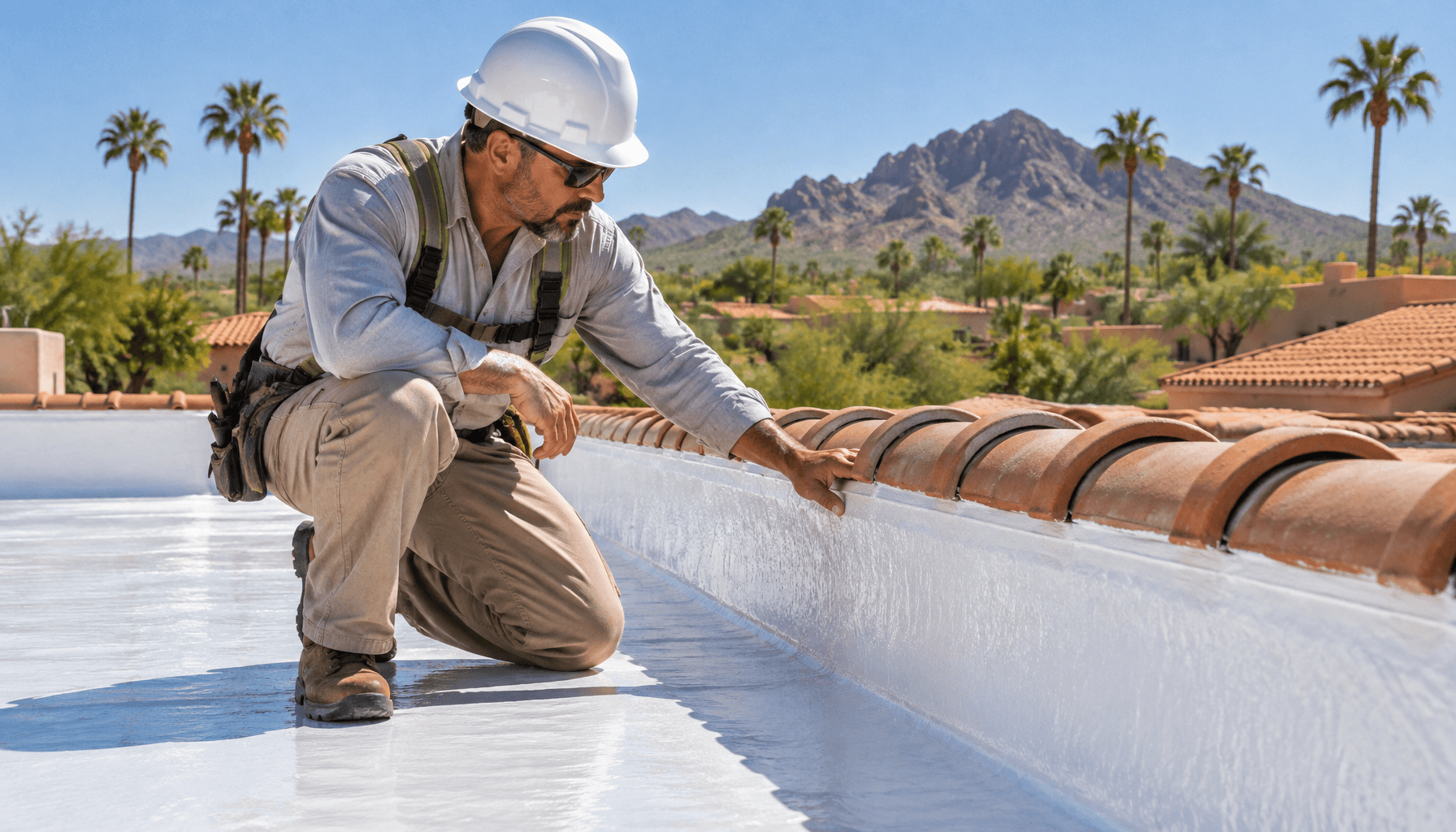
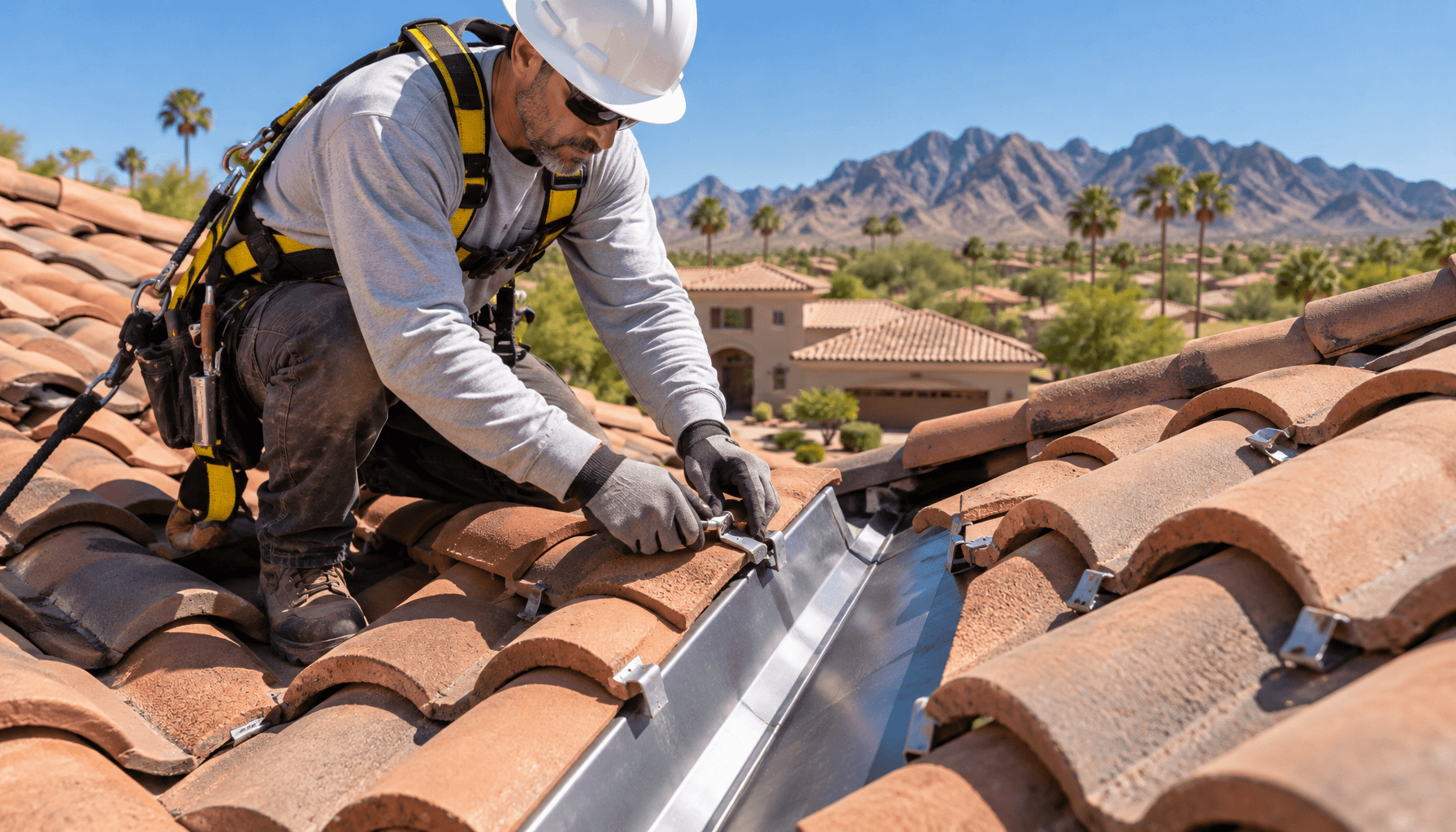
Each phase in this workflow is critical. Start with a comprehensive roof assessment to identify vulnerabilities. Material selection prioritizes durability: 26-gauge galvanized steel valley flashing resists corrosion and wind uplift. Parapet wall metal coping prevents water infiltration. Choose the right fastening method: Tile clips outperform adhesives in wind resistance. Finally, a thorough inspector review ensures adherence to statutory requirements, culminating in final compliance approval.
Methodology Benchmark: Legacy Approaches vs. Modern Standards
| Criteria | Unverified/Legacy Methods | Modern ATR Assured Standards |
|---|---|---|
| Fastening Techniques | Foam Adhesive | Tile Clip Fasteners |
| Flashing Materials | Aluminum Flashing | 26-Gauge Galvanized Steel |
| UV Protection | Standard Underlayment | UV-Resistant Membrane |
| Contractor Verification | Unverified Bonds | Verified AZ ROC Bonds |
Legacy methods often jeopardize structural integrity. Foam adhesives, while easy to apply, cannot match the holding power of tile clip fasteners in monsoon conditions. Aluminum flashing corrodes over time, unlike the robust 26-gauge galvanized steel. Standard underlayments degrade rapidly under Arizona's UV index. Modern standards demand UV-resistant membranes. Verification of contractor credentials through AZ ROC is essential to mitigate risks.
Essential Takeaways & Axioms for Property Owners
- Inspect annually. Schedule regular inspections to identify and address vulnerabilities.
- Select materials wisely. Opt for durable materials like galvanized steel and UV-resistant membranes.
- Verify contractor credentials. Ensure your contractor is AZ ROC licensed and bonded.
- Prioritize mechanical fastening. Use tile clips over adhesives for superior wind resistance.
Document Tags & Standards
Oliver Green
Verified Trade Standards AnalystLead Technical Writer & Trade Compliance Analyst • American Trade Registry Research
Lead technical writer and trade compliance systems analyst at American Trade Registry. Researching US building codes (IBC/IRC), OSHA safety mandates, state contractor licensing compliance, Mechanics Lien statutes, and automated contractor vetting and escrow assurance workflows for American property owners.
Need a vetted, licensed local pro?
Post your job in 90 seconds. We match you with verified, ROC licensed & insured tradespeople backed by our Peace of Mind guarantee.