Innovations in Slab Leak Detection Technologies: Enhancing Accuracy in Phoenix Homes

Lead Technical Writer & Trade Compliance Analyst • American Trade Registry Research
The Core Problem & Regulatory Context
Slab leaks present a significant challenge in residential properties across Phoenix, Arizona, often leading to substantial structural damage and financial strain if not accurately detected and remediated. The semi-arid climate exacerbates soil movement, causing foundation shifts that can fracture embedded plumbing lines. Under the International Residential Code (IRC) and Uniform Plumbing Code (UPC), homeowners must ensure all plumbing systems are properly maintained to prevent leak-induced damage. The National Electrical Code (NEC/NFPA 70) mandates conduit integrity to avoid electrical hazards in wet conditions. Arizona state law obligates licensed contractors to comply with specific detection protocols, as outlined by the Registrar of Contractors (ROC).
In Phoenix, addressing slab leaks can cost a homeowner anywhere from $2,500 to $10,000, depending on the extent of the damage and the complexity of the repair. This financial burden, coupled with the potential for compromised structural integrity, underscores the necessity for precise detection methods. Inconsistent methods have historically led to unnecessary excavation, imposing further costs and disruptions. Therefore, adherence to standards and using advanced technology in leak detection is essential for minimizing impact and ensuring compliance with municipal codes.
Workflow Architecture & Execution Topology
[ START ]
    |
    v
[ Initial Assessment ] ----> [ Soil Moisture Test ]
    |                             |
    v                             v
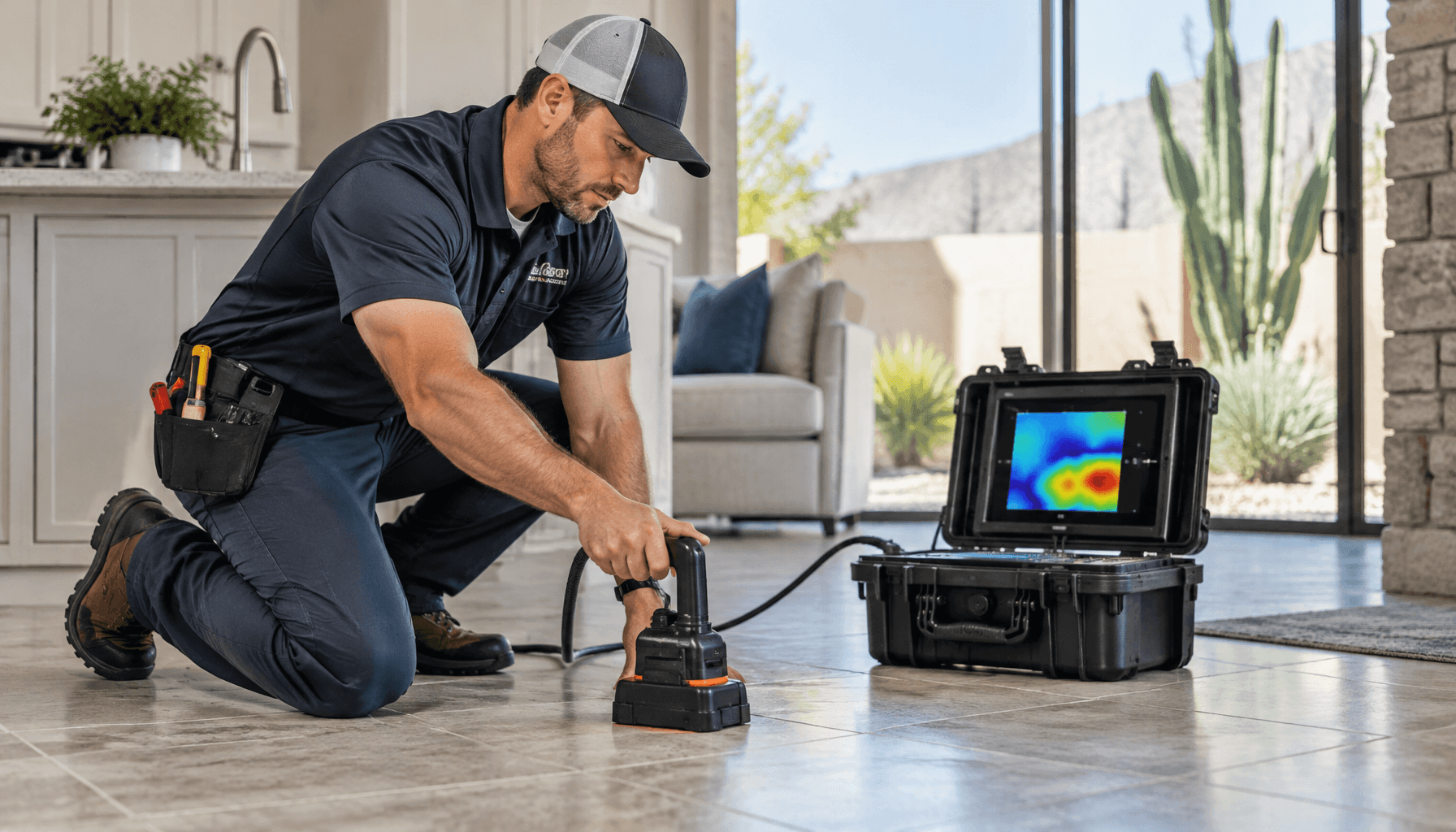
[ Acoustic Leak Detection ] -- [ Pressure Testing ]
    |                             |
    v                             v
[ Thermal Imaging Analysis ] --> [ Data Integration ]
    |                             |
    v                             v
[ Generate Report ] -----> [ Regulatory Compliance Verification ]
    |                             |
    v                             v
[ Client Consultation ] ----> [ Action Plan Development ]
    |
    v
[ END ]
Methodology Benchmark: Legacy Approaches vs. Modern Standards
| Criteria | Legacy / Naive Practice | Modern ATR Assured Standard |
|---|---|---|
| Vetting Rigor | Surface-level inspection; often misses subsurface leaks. | Multi-layered diagnostic approach incorporating acoustic and thermal technologies. |
| Deposit Security | Inconsistent payment protection; high risk of unwarranted charges. | Strict escrow protocol ensuring funds are held until service completion verification. |
| Dispute Recourse | Limited channels for dispute resolution; often leads to extended legal battles. | Comprehensive, documented process facilitating smooth resolution and clear accountability. |
| Statutory Certification | Lacking formal compliance; increased risk of code violations. | Fully certified under IRC, UPC, and state-specific regulations, ensuring all work meets legal standards. |
Essential Takeaways & Axioms for Property Owners
- Always verify contractor licenses with the Arizona ROC before hiring.
- Use escrow services for payment to preserve financial security.
- Demand detailed, multi-modal detection reports for transparency.
- Ensure all repairs meet IRC and UPC codes to protect property value.
Document Tags & Standards
Oliver Green
Verified Trade Standards AnalystLead Technical Writer & Trade Compliance Analyst • American Trade Registry Research
Lead technical writer and trade compliance systems analyst at American Trade Registry. Researching US building codes (IBC/IRC), OSHA safety mandates, state contractor licensing compliance, Mechanics Lien statutes, and automated contractor vetting and escrow assurance workflows for American property owners.
Need a vetted, licensed local pro?
Post your job in 90 seconds. We match you with verified, ROC licensed & insured tradespeople backed by our Peace of Mind guarantee.