Direct In-Slab Plumbing Reroute vs Trenchless Epoxy Relining Methodologies

Lead Technical Writer & Trade Compliance Analyst • American Trade Registry Research
The Core Problem & Regulatory Context
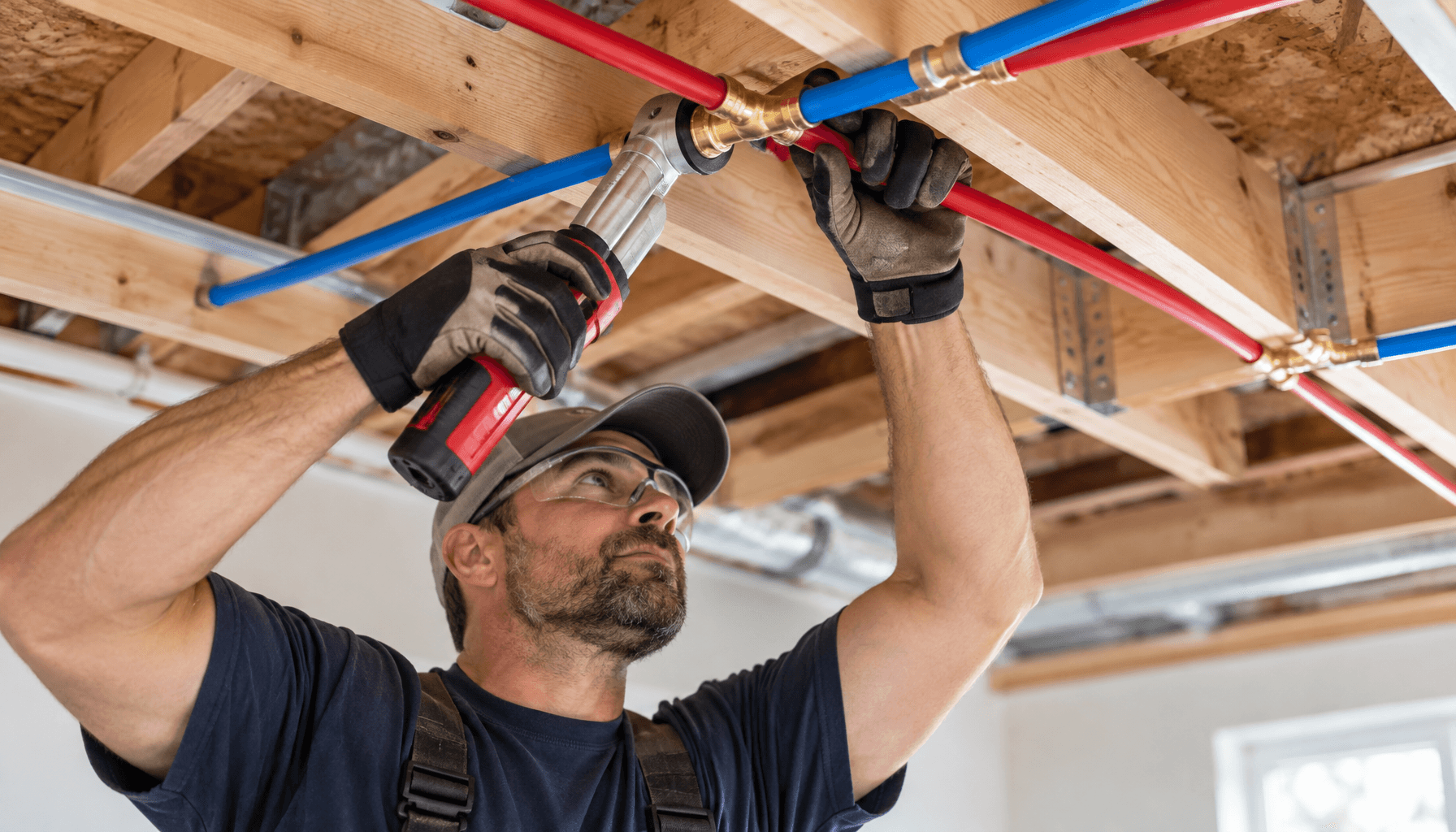
In the Southwest, particularly the Phoenix area, in-slab copper plumbing systems face significant degradation. Hard water minerals and thermal expansion against concrete exacerbate this. Such conditions often lead to leaks and failures. Both the International Residential Code (IRC) and the Uniform Plumbing Code (UPC) mandate corrective measures when system integrity is compromised. Under UPC 602.0, any repair must ensure that potable water systems remain free from contaminants.
Costs vary, with in-slab rerouting typically ranging from $7,000 to $15,000, largely due to invasive concrete work. Epoxy relining can cost $4,000 to $10,000, providing a less invasive alternative. Arizona Registrar of Contractors, Title 32, Chapter 10, sets forth contractor licensing requirements, ensuring only certified professionals undertake these tasks. Compliance is non-negotiable: IRC Section P2603.2.1 requires plumbing systems to withstand thermal expansion forces typical of the Southwest's 115°F heat. Safety precedes speed. OSHA 1926 standards further dictate safe work practices in confined spaces typical of under-slab environments.
Workflow Architecture & Execution Topology
+-------------------+
|   Property Owner  |
+-------------------+
          |
          v
+-------------------+
|  Initial Inspection| <---------+
+-------------------+           |
          |                     |
          v                     |
+--------------------+          |
| Compliance Check   | ---------+
| (UPC & IRC)        |
+--------------------+
          |
          v
+---------------------+
|  Method Selection   | <------------------+
| (Reroute vs. Relining)|                  |
+---------------------+                   |
          |                               |
+---------+-------------+                 |
| In-Slab Reroute       | Epoxy Relining  |
+-----------------------+-----------------+
          |                               |
          v                               v
+---------------------+          +---------------------+
|  Demolition &       |          |  CIPP Liner Install |
|  Reroute Install    |          |  & Curing           |
+---------------------+          +---------------------+
          |                               |
          v                               v
+---------------------+          +---------------------+
|  System Testing &   |          |  System Testing &   |
|  Compliance Audit   |          |  Compliance Audit   |
+---------------------+          +---------------------+
          |                               |
          v                               v
+---------------------+          +---------------------+
|  Final Compliance   |          |  Final Compliance   |
|  Report             |          |  Report             |
+---------------------+          +---------------------+
Methodology Benchmark: Legacy Approaches vs. Modern Standards
| Criteria | Unverified/Legacy Methods | Modern ATR Assured Standards |
|---|---|---|
| Vetting Rigor | Minimal Contractor Checks | AZ ROC Title 32 Compliance |
| Escrow Protection | Customer Risk Exposure | Mandatory Escrow Accounts |
| Audit Trail | No Formal Tracking | Detailed Project Logs |
| Statutory Certification | Inconsistent Adherence | UPC & IRC Compliance |
Essential Takeaways & Axioms for Property Owners
- Verify Licenses First. Ensure contractors hold valid AZ ROC licenses.
- Demand Compliance Reports. Require detailed reports aligned with UPC and IRC.
- Prioritize Safety Measures. Confirm adherence to OSHA 1926 standards for worker safety.
- Insist on Written Guarantees. Secure warranties covering workmanship and materials.
Document Tags & Standards
Oliver Green
Verified Trade Standards AnalystLead Technical Writer & Trade Compliance Analyst • American Trade Registry Research
Lead technical writer and trade compliance systems analyst at American Trade Registry. Researching US building codes (IBC/IRC), OSHA safety mandates, state contractor licensing compliance, Mechanics Lien statutes, and automated contractor vetting and escrow assurance workflows for American property owners.
Need a vetted, licensed local pro?
Post your job in 90 seconds. We match you with verified, ROC licensed & insured tradespeople backed by our Peace of Mind guarantee.